 Customise Your Training

TechSource Systems is MathWorks Authorised Reseller and Training Partner


Versal
Learn the Versal® AI Engine architecture & how to program AI Engines

This course describes the Versal® AI Engine architecture, how to program the AI Engines (single kernel programming and multiple kernel programming using data flow graphs), the data communications between the PL and AI Engines, and how to analyze the kernel program using various debugger features. The emphasis of this two days course is on:

Software and hardware developers, system architects, and anyone who needs to accelerate their software applications using Xilinx devices


After completing this comprehensive training, you will have the
necessary skills to:
TechSource Systems is MathWorks Authorised Reseller and Training Partner
Objective: Provides an overview of the Versal architecture at a high level and describes the various engines in the Versal ACAP, such as the Scalar Engines, Adaptable Engines, and Intelligent Engines. Also describes how the AI Engine in the Versal ACAP meets many dynamic market needs.


Objective: Introduces the architecture of the AI Engine and describes the AI Engine interfaces that are available, including the memory, lock, core debug, cascaded stream, and AXI-Stream interfaces. Describes the memory module architecture for the AI Engine and how memory can be accessed by the AI Engines in the AI Engine arrays.
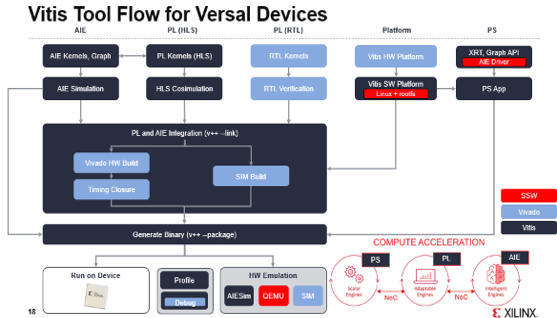
Objective: Reviews the Vitis tool flow for the AI Engine and demonstrates the full application acceleration flow for the Vitis platform.
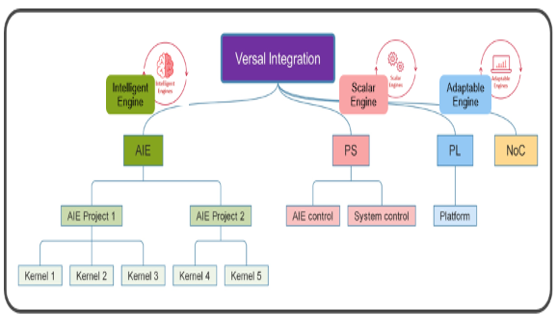
Objective: Covers what application partitioning is and how an application can be accelerated by using various compute engines in the Versal ACAP. Also describes how different models of computation (sequential, concurrent, and functional) can be mapped to the Versal ACAP.
Objective: Provides an AI Engine functional overview and identifies the supported vector data types and high-width registers for allowing single-instruction multiple-data (SIMD) instructions. Describes what intrinsic functions are, the three types of vector management operations using intrinsic functions and AI Engine APIs (load and store, element conversion, and lane insertion/extraction), multiplication functions, and application-specific functions.

Objective: Describes the different reports generated by the tool and how to view the reports that help to optimize and debug AI Engine kernels using the Vitis analyzer tool.

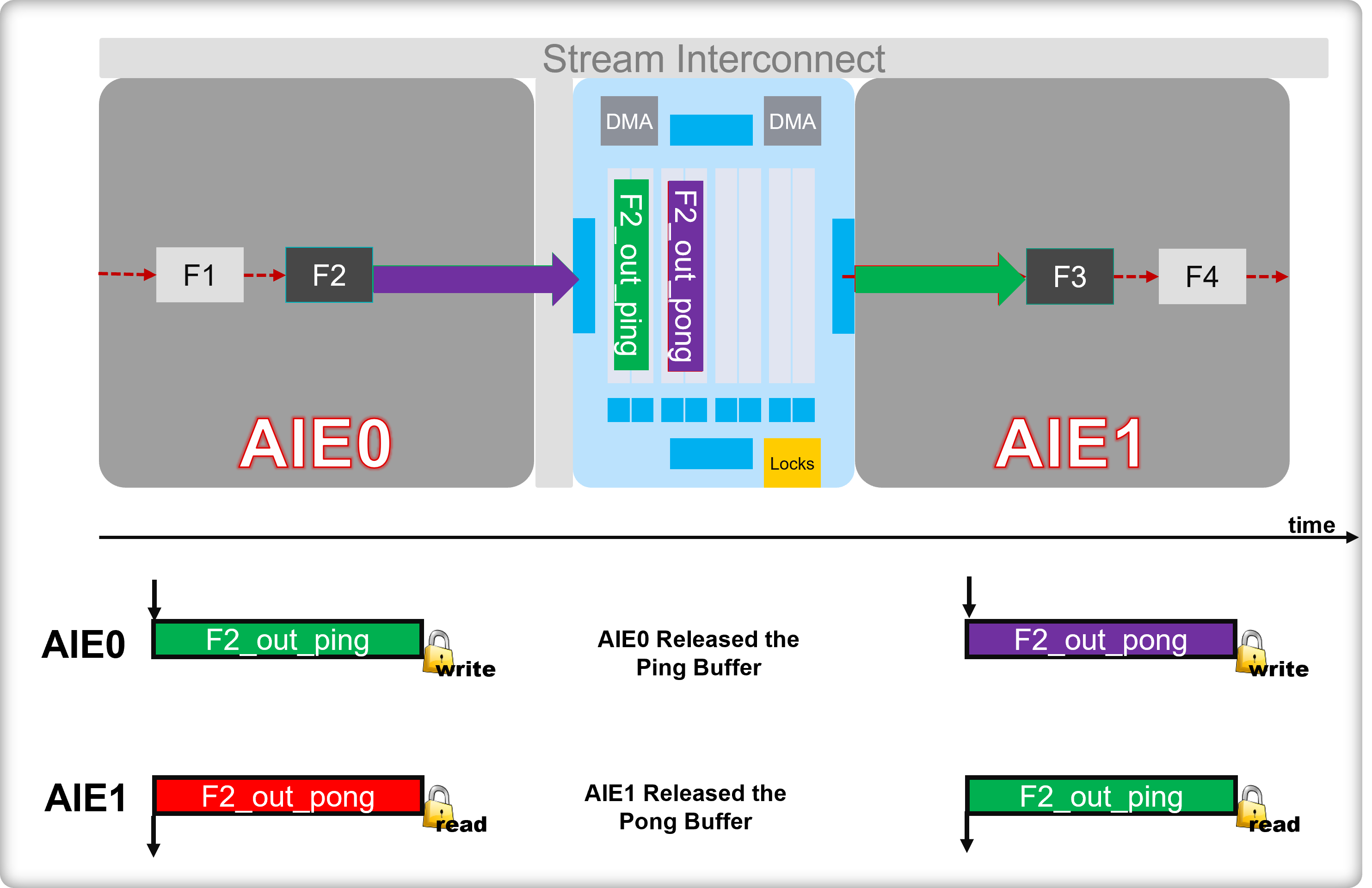
Objective: Describes window and streaming APIs and reviews the various window operations for kernels. Also discusses using overlapping data and various data movement use cases. Reviews the AI Engine kernel programming flow for programming and building a single kernel. Also illustrates the steps to create, compile, simulate, and debug a single kernel program using the Vitis IDE tool. Illustrates Versal AI Engine kernel programming in detail, reviewing the scalar kernel code and comparing with vector kernel code that utilizes intrinsic functions and vector data types. Provides the basics of the data flow graph model and graph input specifications for AI Engine programming. Also reviews graph input specifications, such as the number of platforms and ports. Describes the ADF graph in detail and demonstrates the steps to create a graph and set the runtime ratio and graph control APIs from the main application program